
The RIT Theme Park Enthusiasts club hosts a large scale themed experience every year at the Imagine RIT expo featuring a number of individual themed entertainment projects including model Animatronic and Show Action Equipment figures, a VR roller coaster experience on the No-Limits simulator platform, and several scale model rides from club and competition projects. For the 2025-2026 school year I have been selected as co-lead for the No-Limits VR rollercoaster and will also be contributing to several other projects from the club.
As a co-lead for the NoLimits2 project team this year I helped host the weekly design meetings, contributed to the ride layout and design, and contributed several mesh models to the project. As a leader I did a mix of lead by example doing the same work as I ask of my team, and a more objective "removing barriers" role in which I worked on some technical issues with our club hardware and began development on a Blender extension to optimise our workflow and make the process of clicking things in Blender -> something cool happens in NoLimits more seamless. A POV ridethrough of the final ride is shown below.
For the SAE/Interactive team I helped design parts of the scavenger hunt. I was away on co-op during the fall semester, but designed a small wooden box which could be laser cut and assembled with wood glue to hold four buttons. I also designed the wiring for the circuit and assisted another member with the software to recognize the correct button press sequence which would cause a 3D printed barrel to open. The primary sides of the box had rotational symmetry around the Z axis rather than mirror symmetry partially for aesthetic reasons and partially to reduce the possibility that two fronts and one side would be laser cut instead of one front and two sides. The rear panel is identical to the other three sides with the addition of a small cutout for wiring.
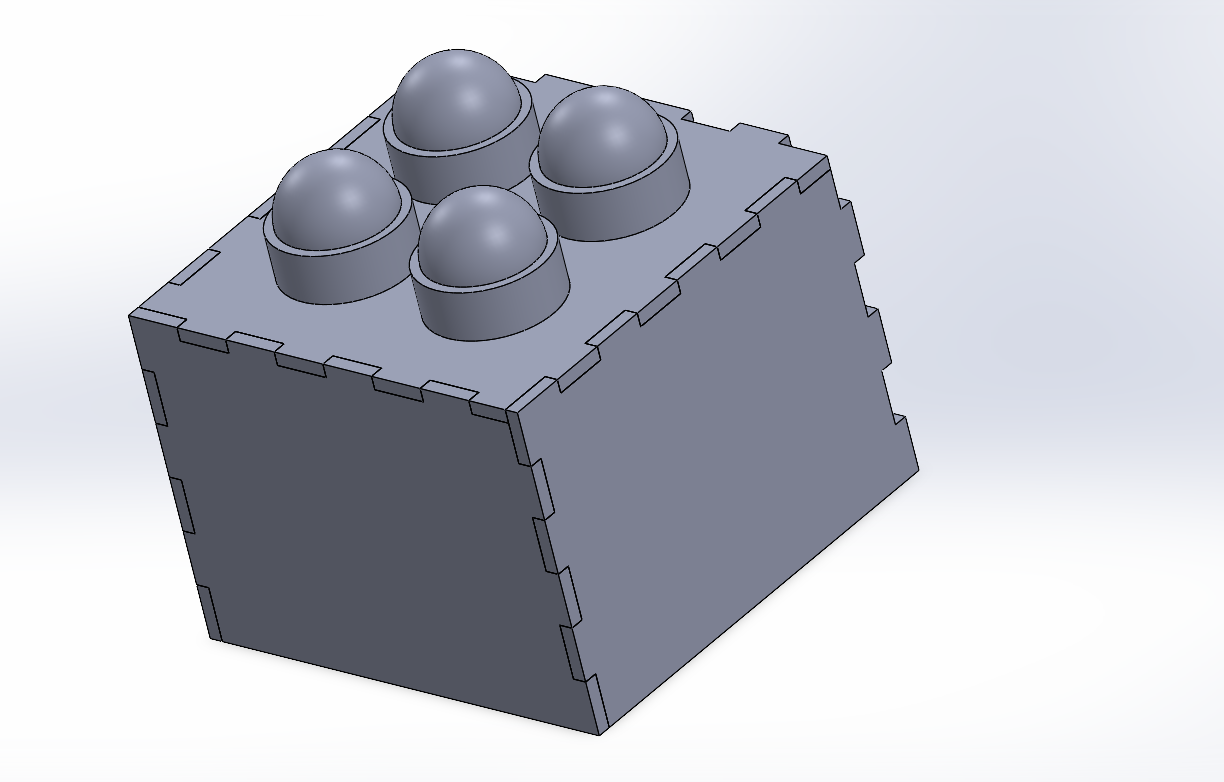
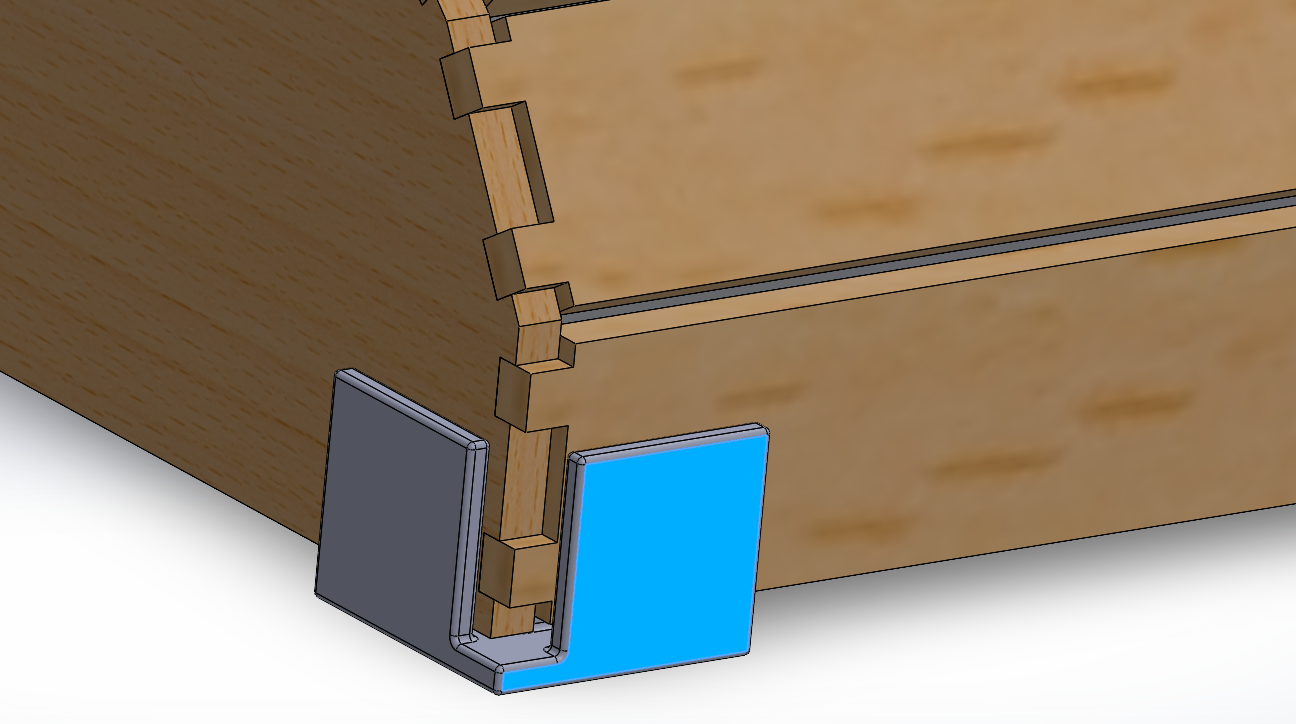
I then focused mostly on the integration build of many of the components that others had designed. Initial assembly of one of the treasure chests proved difficult, particularly in aligning the sides of the chest bottom and top which led to cascading alignment and fitment issues. I solved this problem by designing a generic 3D printed jig which could hold the corners of a laser cut wood structure square while the wood glue dried, which could be used for the base and lid of the chest, as well as the wooden button box I created and any future laser cut assemblies the team makes in the future.
Three chests were manufactured, two were static props that remained shut while one was intended to open upon insertion of a coin into a slot in the front. I designed a servo actuated linkage which opened and closed the lid, implemented a de-bounced coin detection function to handle the signal input from an IR sensor on the coin slot, implemented a speed-tuneable system for opening and closing the lid with adjustable timing, and added in some other quality of life features like a reset button on the back which could close the lid when done and also manually actuate the chest as a failsafe if the IR detection failed or if we ran out of coins to use during the scavenger hunt.
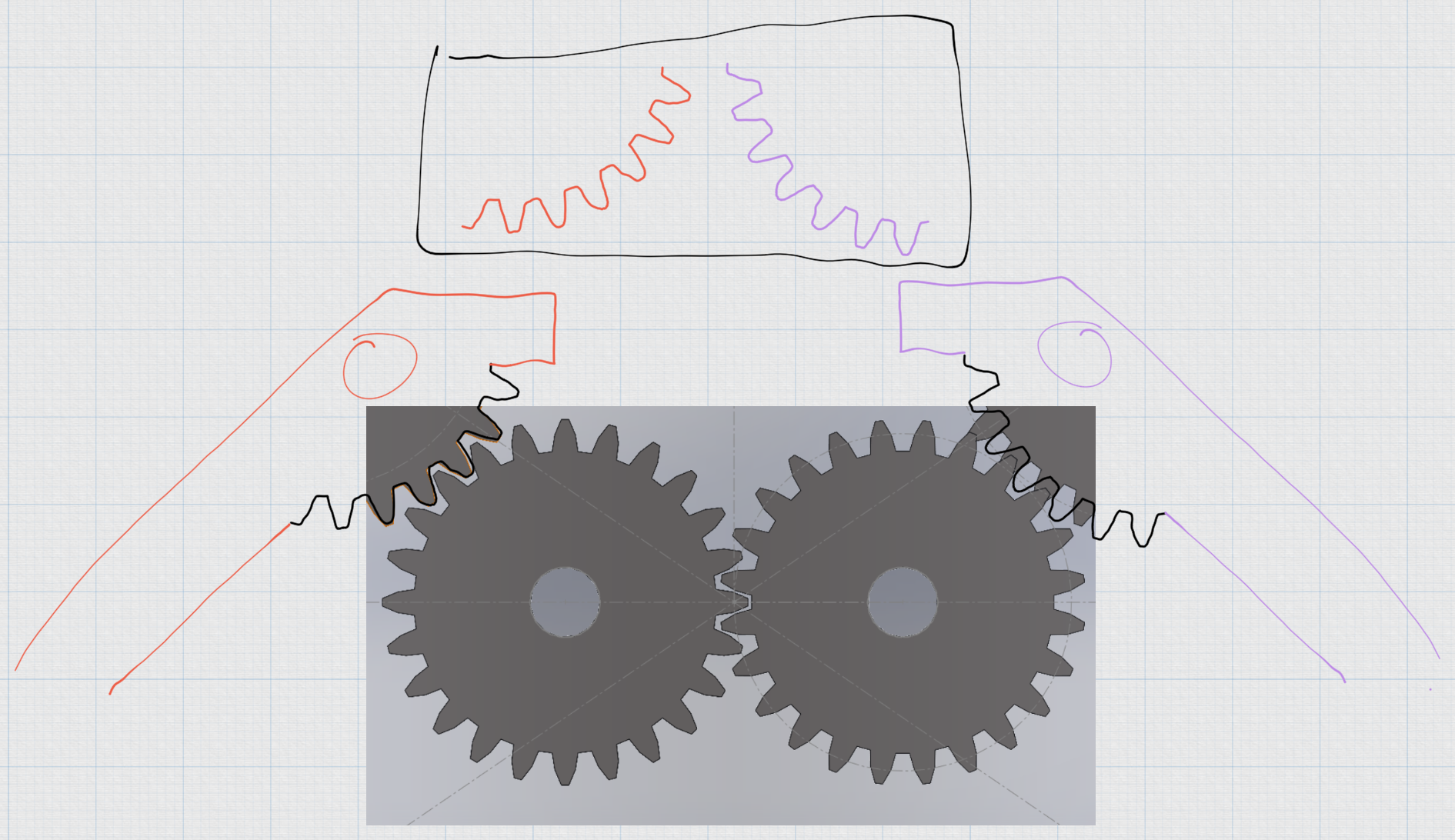
For the animatronic team I primarily gave technical advisement due to a time conflict that did not allow me to attend meetings often, but also designed and manufactured a synchronised actuation system for both wings using a single servo. This was done with two center gears where one is driven directly by a servo and the other functions as an idler to obtain the correct movement direction at both wings. The inner gears connected to a set of outer gears (or rather 1/3 of a gear) integrated directly into a short stub on which the wing assembly could be affixed later one a final design had been made. the two wings were not able to be made as mirror copies of each other due to a half tooth shift in alignment of the gears. Initially the intent was to laser cut the gears from acrylic and epoxy them into a wing assembly, but the team agreed with my assesment that resin printing the gears would provide sufficient durability and allow for easier manufacturing.
For the Imagine RIT project I had little to no involvement in the software however during the summer I wrote new software as part of a refurbishment of Buckles the animatronic parrot to be used in the upcoming Maker Faire haunted house project.
The flat ride for this year was a refurbishment of the carousel from last year to adapt it into a teacups style ride. Very little in the way of CAD code or circuit design was needed for this project but I did assist some manufacturing and assembly throughout the spring semester.
The Design an Theme project team unites many of the different project teams and every year I find myself working on the overall D&T in some capacity. To round out the complete set though, I also made a point to do at least a couple small things for Water Ride and KNEX which mainly consisted of hands on help to bring their ideas to reality.